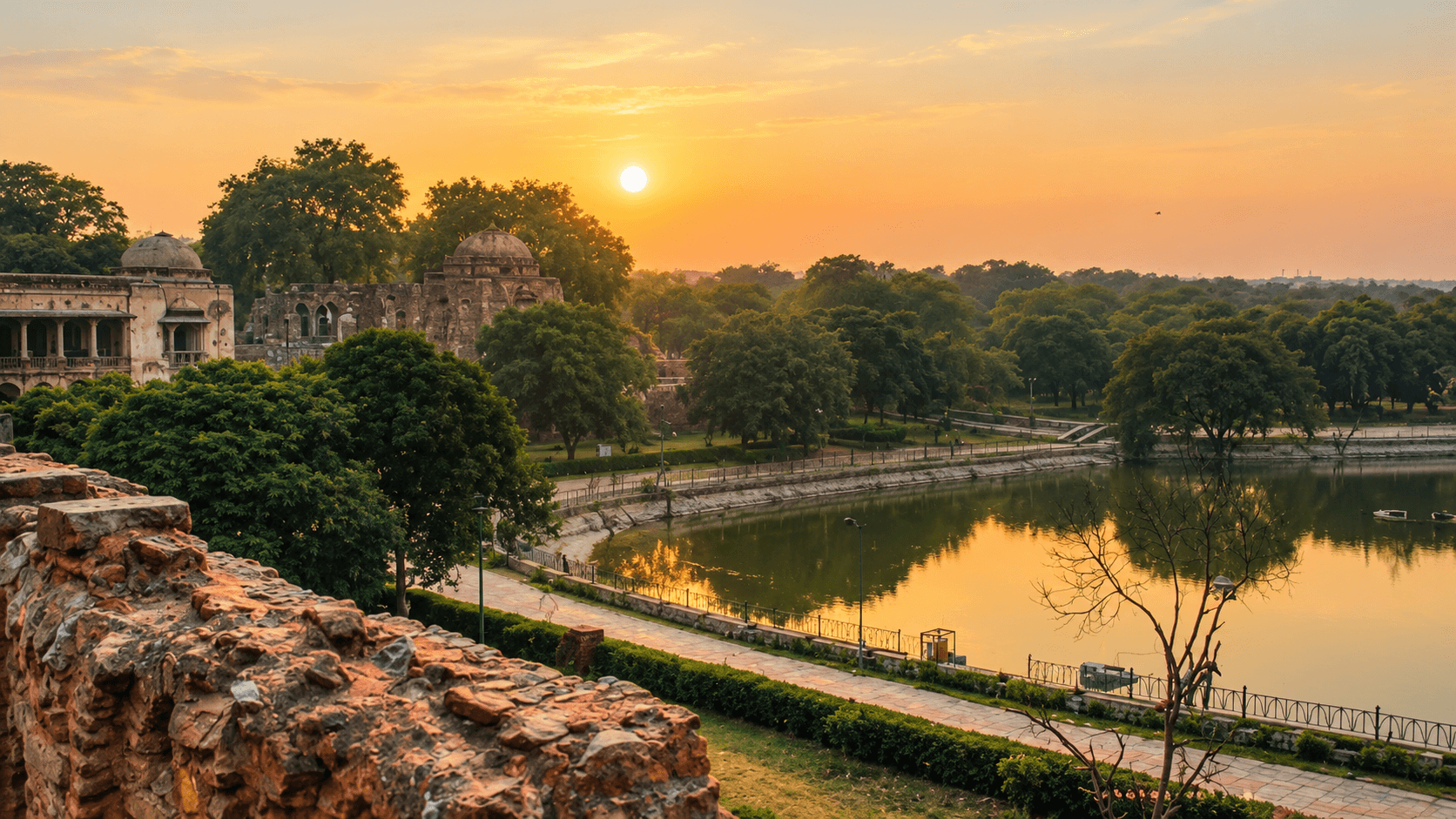
At 7 AM the water at Hauz Khas is still. A few joggers circle the lake inside Deer Park, a man scatters grain for pigeons near the steps of a ruined madrasa, and the village above is silent except for the sound of shop shutters going up. By 11 the same lanes will be packed with people looking for a table. Get here early and you see the place before it turns into a scene.
That contrast is really what makes one day in South Delhi worth planning properly. Hauz Khas, Lodhi Garden and Safdarjung Enclave sit within a twenty-to-thirty-minute drive of each other, yet each one belongs to a different century and a different mood. You can cover all three between sunrise and dinner without rushing, if you get the order right. This is the order that works.
7:00 AM - Hauz Khas: Start at the Water, Not the Cafes
Hauz Khas has two lives. The first is medieval. Alauddin Khilji had the tank dug in the 14th century to supply water to Siri, his capital, and Firoz Shah Tughlaq later restored it and built a madrasa on its edge. His tomb sits inside the same complex, and the long L-shaped madrasa still looks over the lake with its arched windows and domed pavilions.
The second life is the village, a maze of lanes above the monuments packed with boutiques, galleries, rooftop restaurants and designer studios. It's loud at night and mostly asleep before 11 AM. That's why mornings belong to the ruins.
Walk in through Deer Park and take the path along the lake first. You'll pass peacocks, dog walkers and the occasional group doing laughter yoga under the trees. Then climb up to the madrasa and tomb. Light comes in low through the stone arches before 9 AM, and the place is quiet enough that you can hear the leaves.
Here's one thing visitors miss: the best view of the lake isn't from the village side. It's from the steps of the monument itself, looking back across the water with the tall apartment blocks of Hauz Khas rising behind the trees. Old stone, new glass, one frame.
Practical tip: eat before you come or after you leave. Most village cafes don't open until late morning, and the tea stalls near the Deer Park gate are the only reliable option at 7:30. If you're coming by metro, Hauz Khas station is on the Yellow and Magenta lines, and the walk to the village is about fifteen minutes.
10:30 AM - Lodhi Garden: Tombs You Can Walk Between
Lodhi Garden is the kind of place Delhi residents treat like a living room. Office workers walk laps at dawn, grandparents claim the same benches every day, and couples find the corner behind the Bada Gumbad and assume nobody can see them. Everyone can.
The garden is scattered with 15th and 16th century tombs from the Sayyid and Lodhi dynasties. The Bada Gumbad, a large domed tomb with an attached mosque, is the one most people photograph first. A short walk away is the Sheesh Gumbad, where you can still spot traces of blue glazed tiles along the upper edge. Mohammed Shah's octagonal tomb and Sikandar Lodi's walled tomb are further along the main path. The Athpula, a stone bridge built during Akbar's time, crosses a small stream near the northern side.
There's no entry ticket for the garden, which is partly why it's so crowded on weekends. Weekday mornings are calmer. If you arrive at 10:30 on a Sunday, expect families, picnic mats, and cricket matches in every open patch.
Don't rush the walk. Pick a bench near the Sheesh Gumbad, sit for ten minutes, and watch who passes. The kingfishers and parakeets are easy to spot if you stay still. Jor Bagh metro on the Yellow Line is the closest station, and you can leave through the Lodhi Road side to find cabs quickly.
Hidden detail: the lanes of Lodhi Colony just outside the garden are covered in large murals by Indian and international artists. Take twenty minutes to wander through them before lunch. It's free, it's shaded in the afternoon, and it's a very different side of Delhi from the Mughal-era stones you just left.
1:30 PM - Lunch, then Safdarjung Tomb
By now you're hungry, and the shortest route from Lodhi Garden leads you to Safdarjung. Skip the big restaurants and try INA Market if you want something different. The stalls and small shops here are known for spices, imported groceries and quick plates of momos or Korean snacks. It's busy around lunchtime, and parking is a headache, so take a cab or auto and ask to be dropped at the entrance.
Safdarjung Tomb is a ten-minute ride from there. Built in 1754 for Safdarjung, a viceroy of Awadh under the Mughals, it's often described as the last great garden tomb of that era. The red sandstone and marble are striking, though less polished than the Humayun's Tomb you might have seen photographed more often. That's part of the appeal. Fewer tour groups, more space.
The tomb stands inside a four-part garden, with water channels and pavilions in each corner. Climb the steps to the platform, look back down the central path, and you'll understand why architects keep returning to this plan. If you want photos without people in them, go in the last hour before sunset when the stone turns the color of burnt orange. Entry is ticketed, and Indian nationals pay a small fee. Check the ASI rate on the day.
One small thing: the tomb sits right next to Safdarjung Airport's old boundary, and the sound of traffic from the main road fades as soon as you step inside the garden walls. It's one of the quieter spots in this part of the city.
5:00 PM - Safdarjung Enclave: Where South Delhi Actually Lives
Most itineraries stop at the monuments. This one doesn't, because the neighbourhood around Safdarjung Enclave is where you start to understand how South Delhi works day to day.
Walk through the tree-lined residential blocks around Africa Avenue and you'll find a mix of old family bungalows, small clinics, tutoring centres and neighbourhood bakeries. The market area is busy in the evenings, with fruit sellers, tea stalls and cafes that fill up after 8 PM, especially on weekends. It isn't a sightseeing area in the usual sense. That's exactly why it feels honest.
Green Park Market is a short ride away if you want more options for dinner, and Dilli Haat in INA is close by for handicrafts and regional food stalls from across India. Evening crowds there peak around 7 PM, so go earlier if you want to browse without elbows.
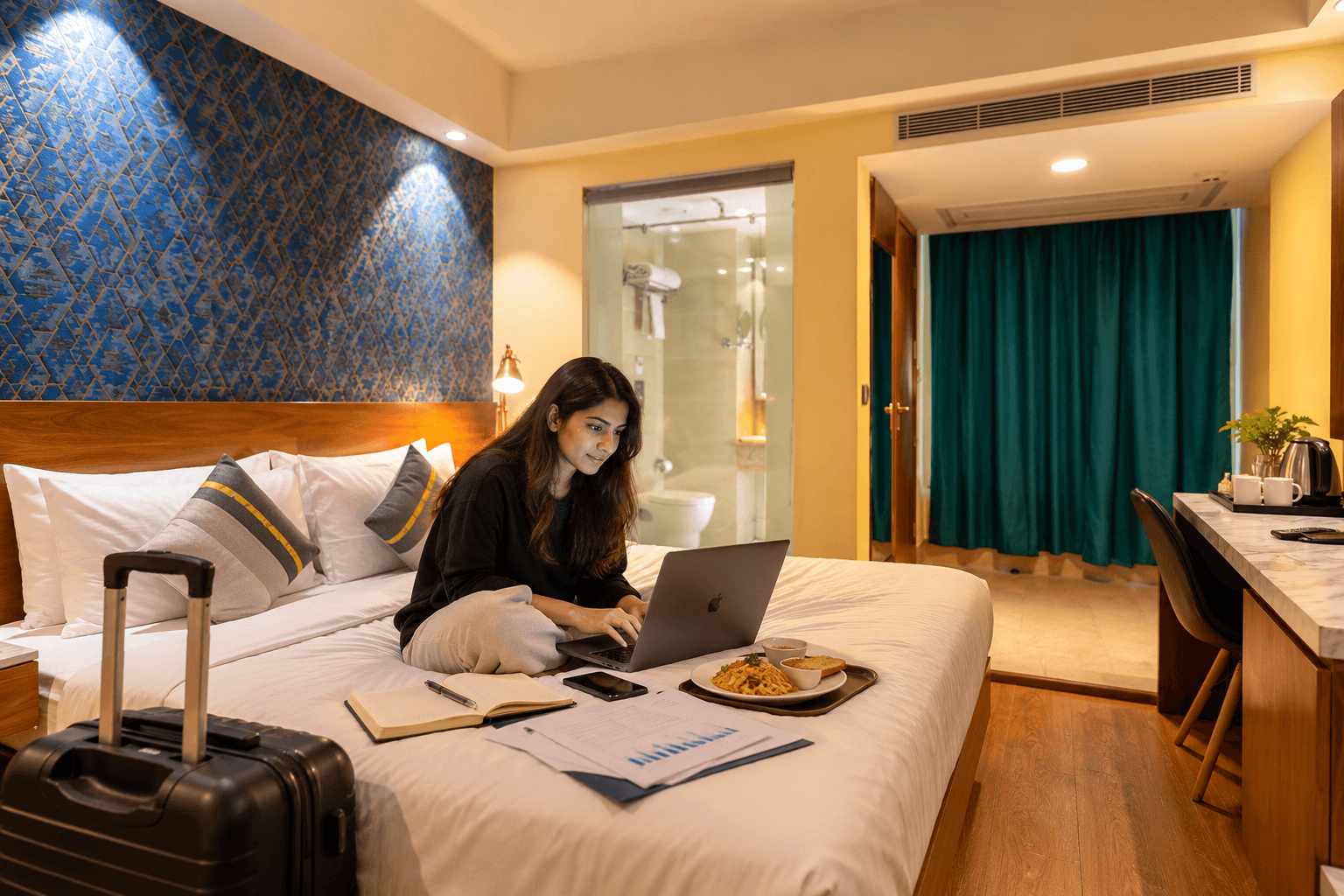
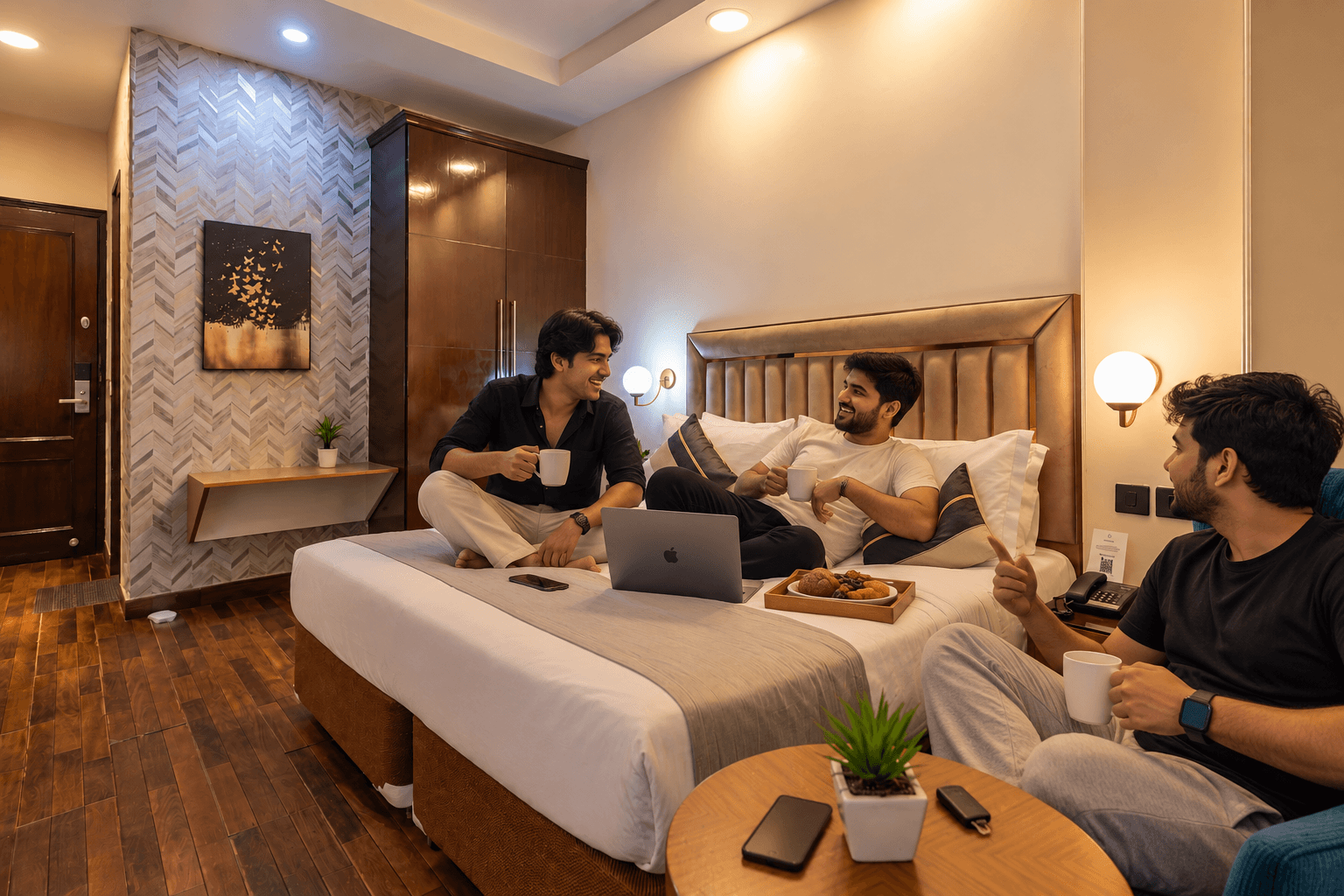
Travelers who spend the whole day on the road often realise the enclave is also a practical base. asar Safdarjung by Orion Hotels sits in this pocket of Safdarjung Enclave, about 10-15 minutes by cab from both Lodhi Garden and Khan Market, and close to AIIMS and the metro. Staying here means you can split this route across two mornings instead of one, or finish the day at your door rather than crossing the city in evening traffic.
8:00 PM - Back to Hauz Khas for Dinner (Optional)
If you still have energy, loop back to Hauz Khas Village after dark. The monuments are closed, but the village switches on completely. Rooftop restaurants fill their balconies, live music drifts from windows, and the lake view from some cafes turns the whole place into a postcard.
Book a table in advance on Friday or Saturday, because the better rooftops fill up by 8:30. Cabs get expensive after 9 PM in this area, so book your return before you sit down to eat.
How to Move Between the Three Areas
The Yellow Line metro connects Hauz Khas, Green Park, AIIMS, INA and Jor Bagh in a straight run, which makes it the easiest way to avoid traffic. Between stations, use autos or app cabs for the last stretch. In peak hours, between 8:30 and 10:30 AM and again from 5:30 to 8 PM, roads around AIIMS and INA slow down badly, so plan to be on the metro at those times.
Season matters too. From October to March, the sequence above works as written. From April to September, flip it. Do Lodhi Garden first thing in the morning, spend the hottest hours in an air-conditioned cafe or back at your room, and head to Hauz Khas for sunset.
One Last Thing
Delhi rewards people who slow down. Spend a few evenings walking between the lake at Hauz Khas, the tombs of Lodhi Garden and the quiet lanes of Safdarjung Enclave, and you'll notice something the monuments alone don't tell you. This part of the city isn't one story. It's a stack of them, layered over six centuries, and most of them are still being lived in.